You opened a terminal in your project, ran claude, and now you want Claude Code to remember the same things your other Claudes already know — the lease, the Q3 plan, the vendor list. Three minutes, one command.
Sign in to Mneme
If you haven’t already, open mneme.tools and click Continue with Google. One tap and you’re in.
Copy the connector URL
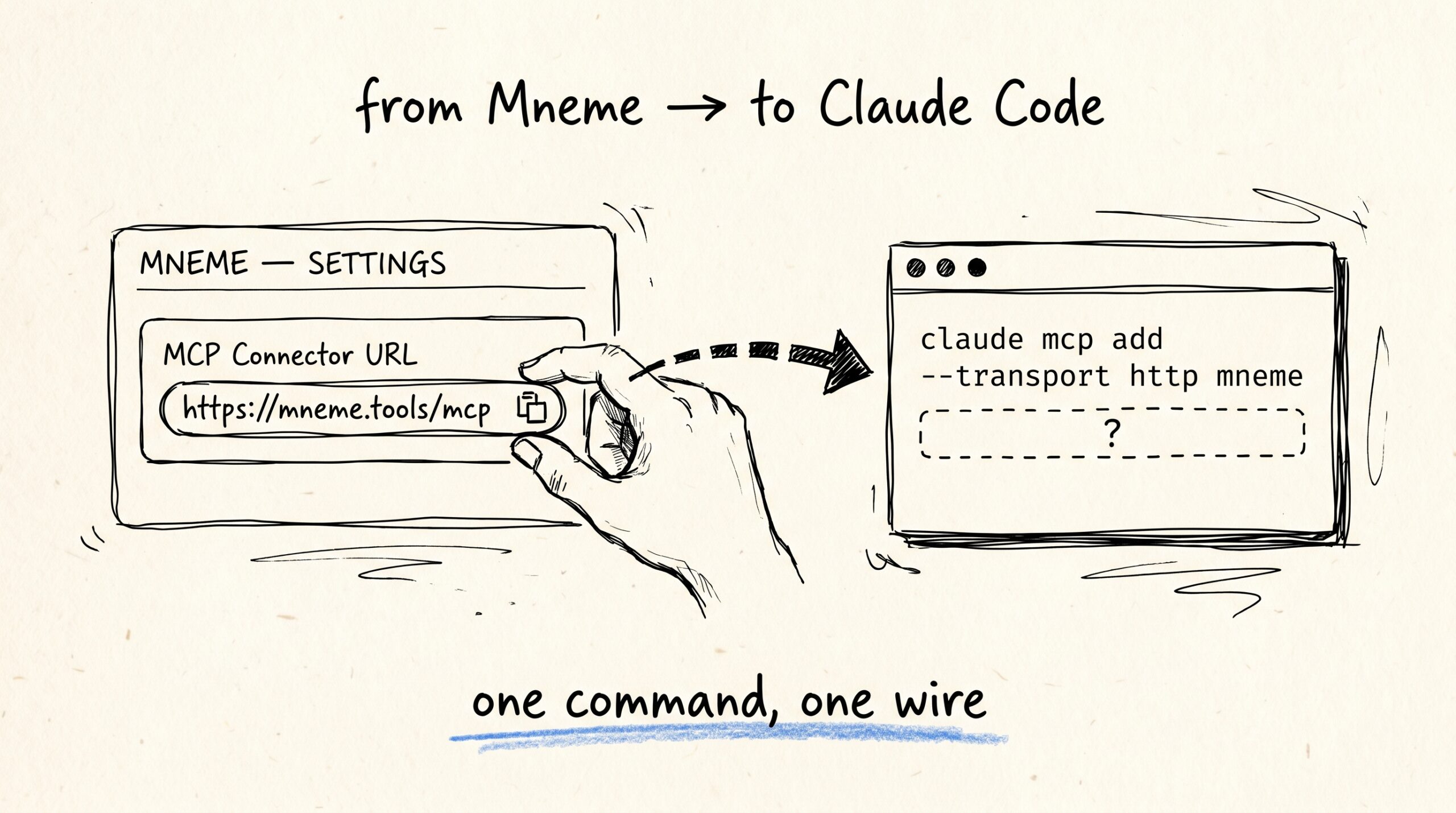
In Mneme, open Settings from the side menu. Halfway down there’s a field labelled MCP Connector URL. The value is:
https://mneme.tools/mcp
Click the copy icon. That’s the only piece of Mneme that Claude Code needs.
Add Mneme to Claude Code
In your terminal, run:
claude mcp add --transport http mneme https://mneme.tools/mcp
That’s the whole command. Claude Code stores Mneme in its server list and the next time you start a session it will try to connect.
If you’d rather scope this to one project instead of every Claude Code session on your machine, run the same command from inside that project’s folder — the default scope is project-local. Pass --scope user to make it global.
Verify your email
The first time Claude Code reaches Mneme, it doesn’t have permission yet. Mneme opens a browser tab and asks for your email, then mails you a sign-in link.
Yes — even though you’re already signed in to Mneme on the web. Claude Code is a different door, and Mneme only opens doors with proof you can read your own email. It’s not retyping your login; it’s signing the lease for this specific terminal.
Click the link in the email. You’ll see Finish signing in as [email protected]. Confirm.
If you see Your account is not authorized to access Mneme — Mneme is in early access right now and accounts are added by hand. Reply to the invite email and we’ll add you.
Pick what this Claude Code can see
Mneme then shows the Authorize access panel with two checkboxes:
- Personal — Home, mobile, cowork — your full personal vault.
- Work — Work-tagged docs only. Enable on work devices so personal data stays private.
Both are on by default.
If this is your personal laptop, leave them both on and click Authorize. If this is a work machine — for example a checked-out repo at the office — uncheck Personal first. (Why that matters →)
The browser tab closes. Claude Code is now connected.
Check it works
Inside Claude Code, type:
/mcp
You should see mneme listed with status connected. Then ask Claude something only Mneme could answer:
what’s in my Mneme vault about the Q3 plan?
If it pulls a real excerpt back, the wire is live. From here on, every Claude Code session in this project — or every project, if you went global — gets Mneme as the memory layer behind it.
A few useful follow-ups:
claude mcp list— show every MCP server Claude Code knows about.claude mcp get mneme— confirm the URL and scope you configured.claude mcp remove mneme— disconnect (the connector token in Mneme stays revoked-on-next-use).
Connect Mneme to Claude Desktop
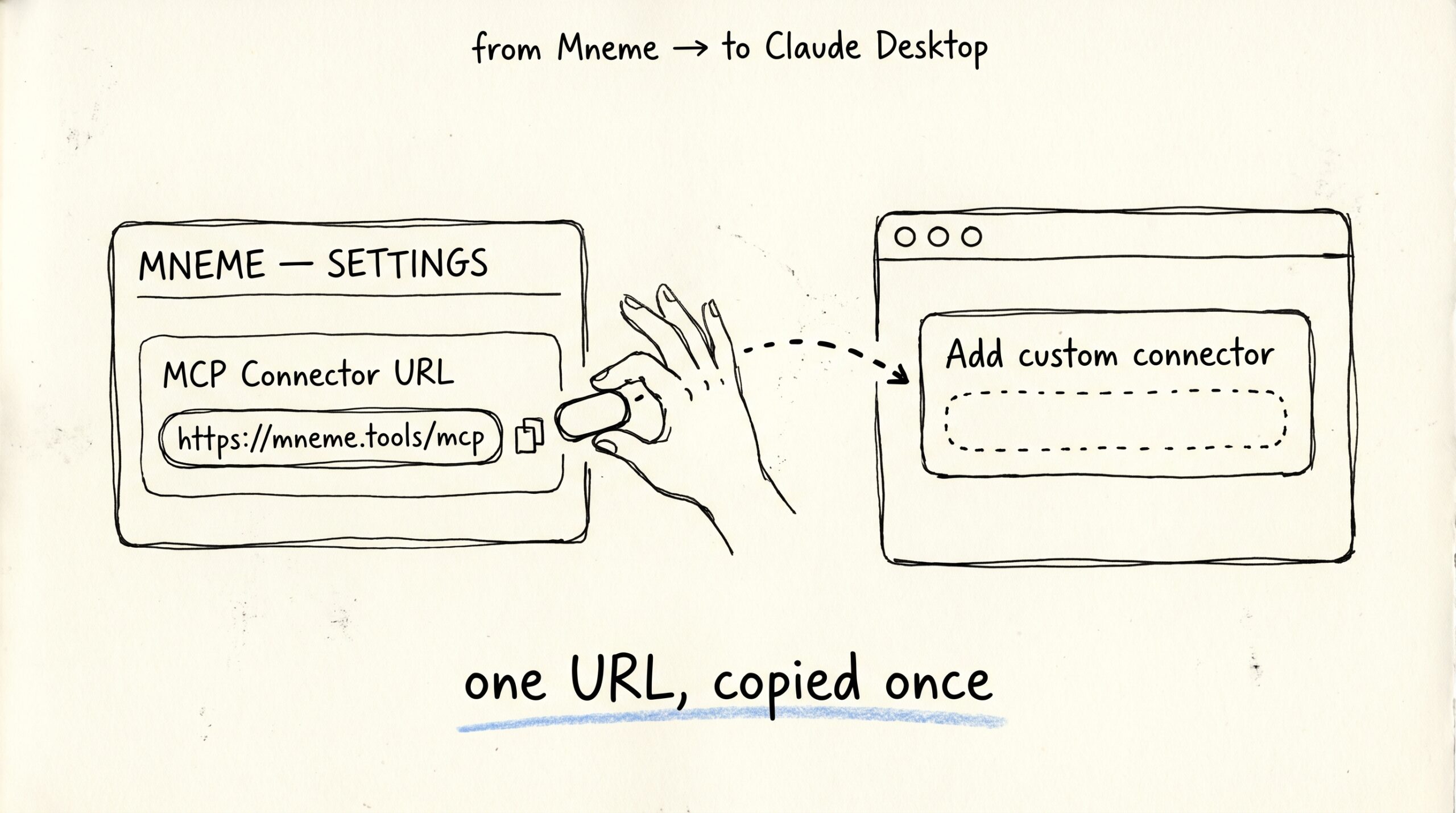
You signed up at mneme.tools. You opened Claude Desktop. There's a connector field staring at you and you're not sure what to paste in. This is that. Five minutes, no…
Connect Mneme to Gemini CLI
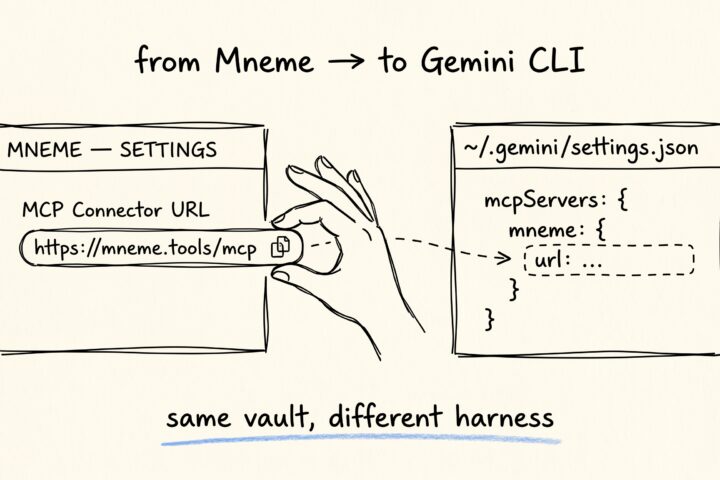
You've been running Gemini CLI in the terminal and the project context vanishes the moment you close it. Mneme is the fix — same vault you'd use in Claude, available…